
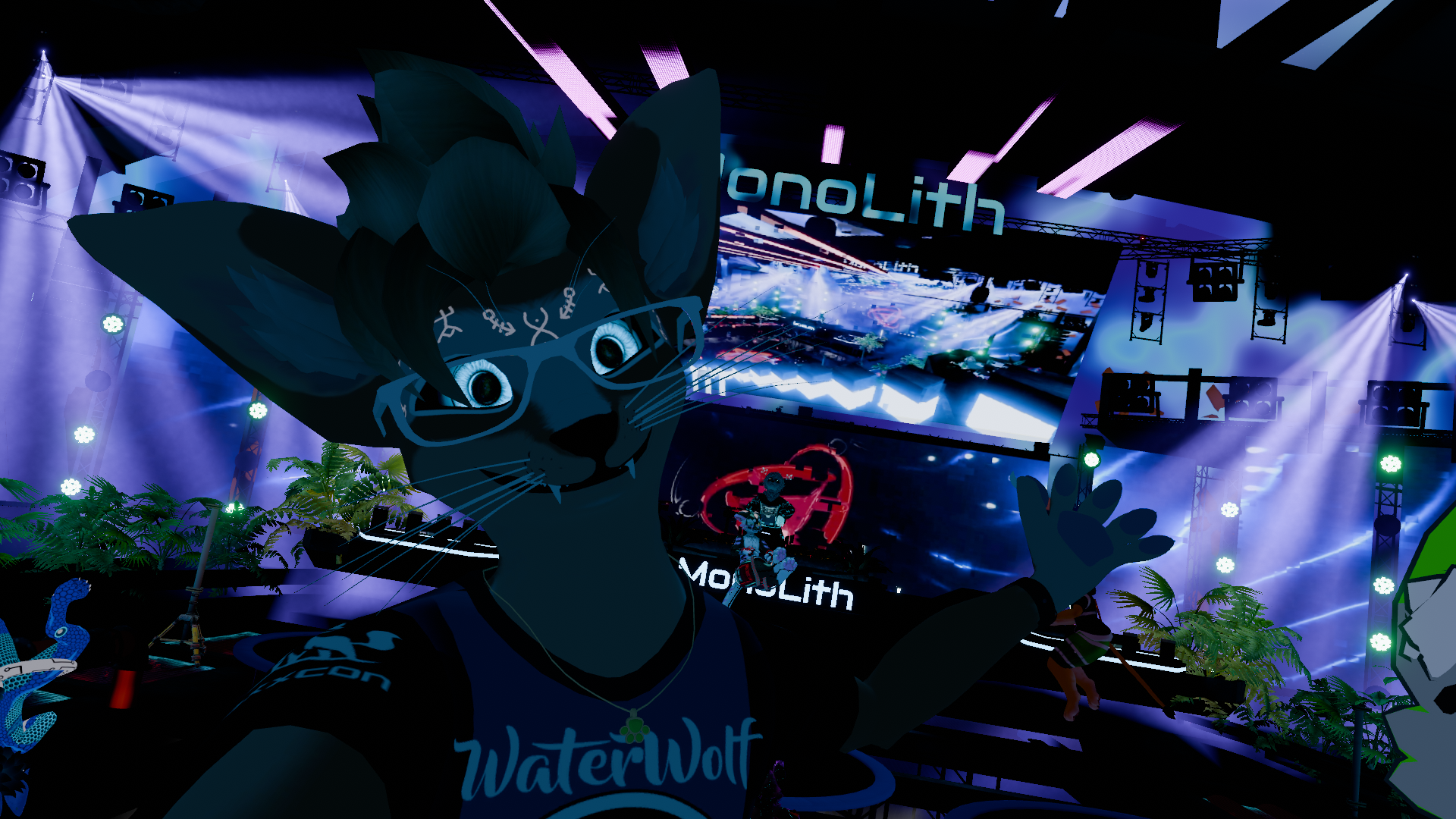
Building spaces that can translate into the real world is important.
This stage could exist.
Maybe not every detail exactly as it appears in VR, but the fundamental design could be built. The lighting rig could be flown. The fixtures could be real. An LD could take this design, walk into a real venue, and understand how to reproduce it.
It's possible.
And I think that constraint, keeping one foot planted in reality, is part of what makes a virtual space believable.
When something follows enough of the rules of the real world, the skills required to build it begin to translate as well.
That's what makes this especially meaningful to me.
This world, its content, and its willingness to work within real-world constraints have actually helped pave the way for people to find opportunities in the real AV industry.
When I heard that was happening, it genuinely made me feel amazing.
Sure, this is VR. You can do practically anything here.
You can make stages float through space. You can build physically impossible lighting rigs. You can ignore gravity. You can spend hundreds of hours mastering systems that exist exclusively within a very specific VR niche.
There is absolutely a place for that kind of creativity.
But there is also something incredibly powerful about building things here that teach skills you can carry somewhere else.
You can learn lighting design.
You can learn signal flow.
You can learn how fixtures behave.
You can learn how a stage is structured.
You can learn how an audience experiences a show.
You can learn how operators work together.
You can learn how technical decisions affect the final production.
Then one day, somebody can take those skills out of the headset and into a real venue.
Suddenly, something they originally learned because they were having fun in VR becomes experience they can build upon professionally.
A hobby becomes a skill.
A skill becomes an opportunity.
And sometimes that opportunity becomes a career that actually puts food on the table.
That's an incredible thing.
VR doesn't have to imitate reality. That's one of its greatest strengths.
But when we choose to build something that could exist, and build it with enough care that the knowledge translates beyond the virtual world, we're doing more than creating a cool stage.
We're giving people a place to learn.
And sometimes, we're giving them the beginning of a living.
Comments